Kodezi Cloud

39%
FASTER ONBOARDING
New users understood product value with fewer steps and less effort.
34%
FASTER USER ACTIVATION
Improved onboarding enabled users to reach their first value sooner.
41%
INCREASE FEATURE ENG
Users interacted more consistently with Kodezi’s AI-assisted workflows.
$1.8M
SEED FUNDED
Refined product experience supported investor confidence & enterprise readiness.
Overview
Kodezi is an AI-powered SaaS platform that helps developers write cleaner, faster code. With tools for bug fixing, code quality improvement, and documentation generation, Kodezi integrates seamlessly with IDEs like VS Code. Kodezi approached us for are design of their website, mobile experience, and brand identity.
The goal was to create a platform that reflects the power of their AI tools and builds trust with both technical teams and business decision-makers.
Industry
Consumer Tech, AI
Headquarters
California, USA
Live Website

Problem
Where friction replaced flow
While Kodezi’s AI-powered platform offered advanced functionality, users faced friction that slowed their ability to trust and engage with the product. The platform lacked clarity, making it difficult for users to find key features, apply fixes, or navigate efficiently.
This led to hesitation, confusion, and frustration, ultimately slowing down the adoption of the platform.
Confusing navigation
made it hard for users to find features or move between tasks.
Friction during key actions
like applying fixes and navigating between features.
Cluttered layout and unclear feedback
during critical actions (e.g., adding fixes, completing tasks).
Slow onboarding and a lack of direction
prevented new users from quickly understanding the platform's value.
Streamlined navigation
made key features easier to find, enabling faster decision-making.
Simplified actions
reduced hesitation, making it easier for users to complete tasks with confidence.
Improved feedback
ensured users received clear responses during critical actions, building trust in the platform.
Mobile optimization
provided a consistent, smooth experience on any device, reducing drop-offs.
A cohesive design system
enhanced visual consistency, supporting a premium, high-quality experience.
Solution
Delivering an engaging developer experience
We designed Kodezi to eliminate friction points and create a smoother, more intuitive platform for developers.
By streamlining navigation, improving feedback, and optimizing key interactions, we helped users complete tasks faster, trust the platform more, and engage with its core features more consistently.
Process
For Kodezi, our design process focused on making things easier for developers. We worked on organizing the platform, so it’s simpler to use and faster to complete tasks.
The goal was to make sure the design was clear, easy to navigate, and matched Kodezi’s high-quality product.
01
Research & Discovery
We researched user needs and business goals to set the direction and key features for Kodezi.
[ User research ] [Persona development][Competitive analysis] [Feature prioritization]
02
Information architecture
We mapped out the user journey, fixed friction points, and made the platform easier to navigate.
[Journey mapping] [User flows] [Wireframing] [Prototype testing]
03
Visual & Interaction Design
We designed a mobile-first experience that aligned with Kodezi and developer needs.
[UI design ] [Visual direction ]
[Interaction states ] [Usability testing]
04
Dev Support & Delivery
We worked with the dev team to ensure the design was built well and optimized after launch.
[Design handoff] [Feedback loops]
[Launch support] [ Post-launch optimization]
Research
UX research & Design artifacts
Feature discovery gap
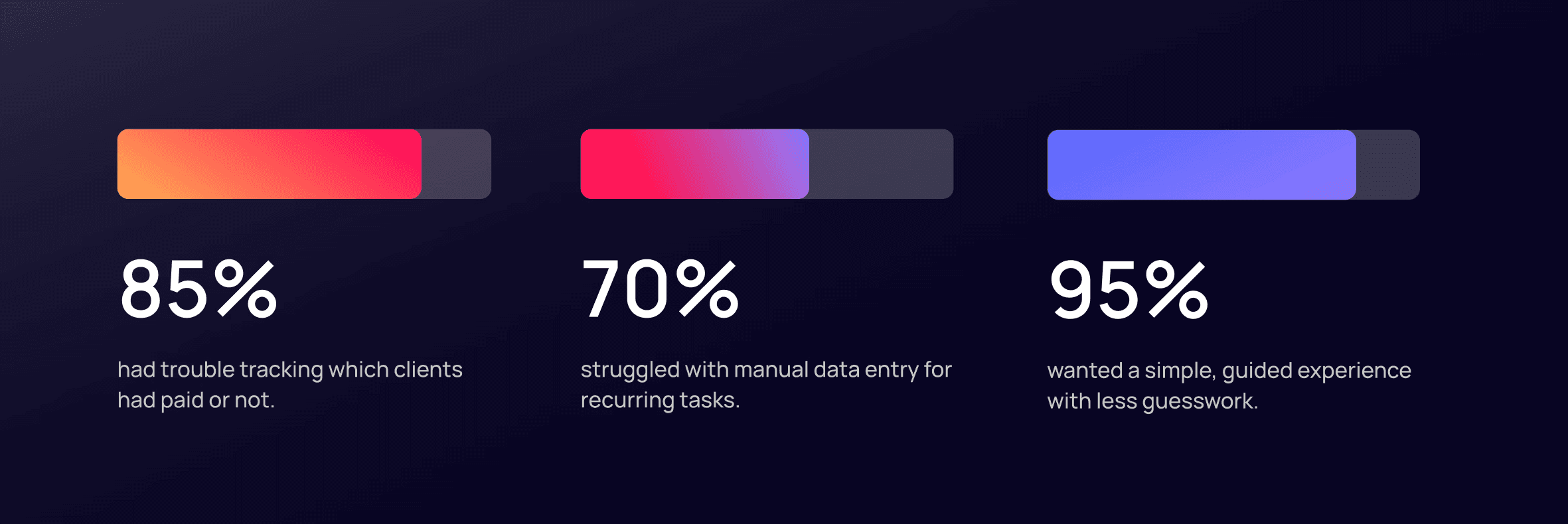
Many users could not find the right feature or flow on the first try, so we rebuilt the structure and entry points.
Need for guided paths
Most users asked for clearer step-by-step guidance, so we designed a guided onboarding and task-based navigation.
Clarity over clutter
A large group felt lost in a crowded layout, so we reduced visual noise and strengthened hierarchy.
Trust and feedback issues
Users needed clear feedback after key actions, so we improved states, messages, and confirmation moments.
Visual Design
Visual identity and brand story
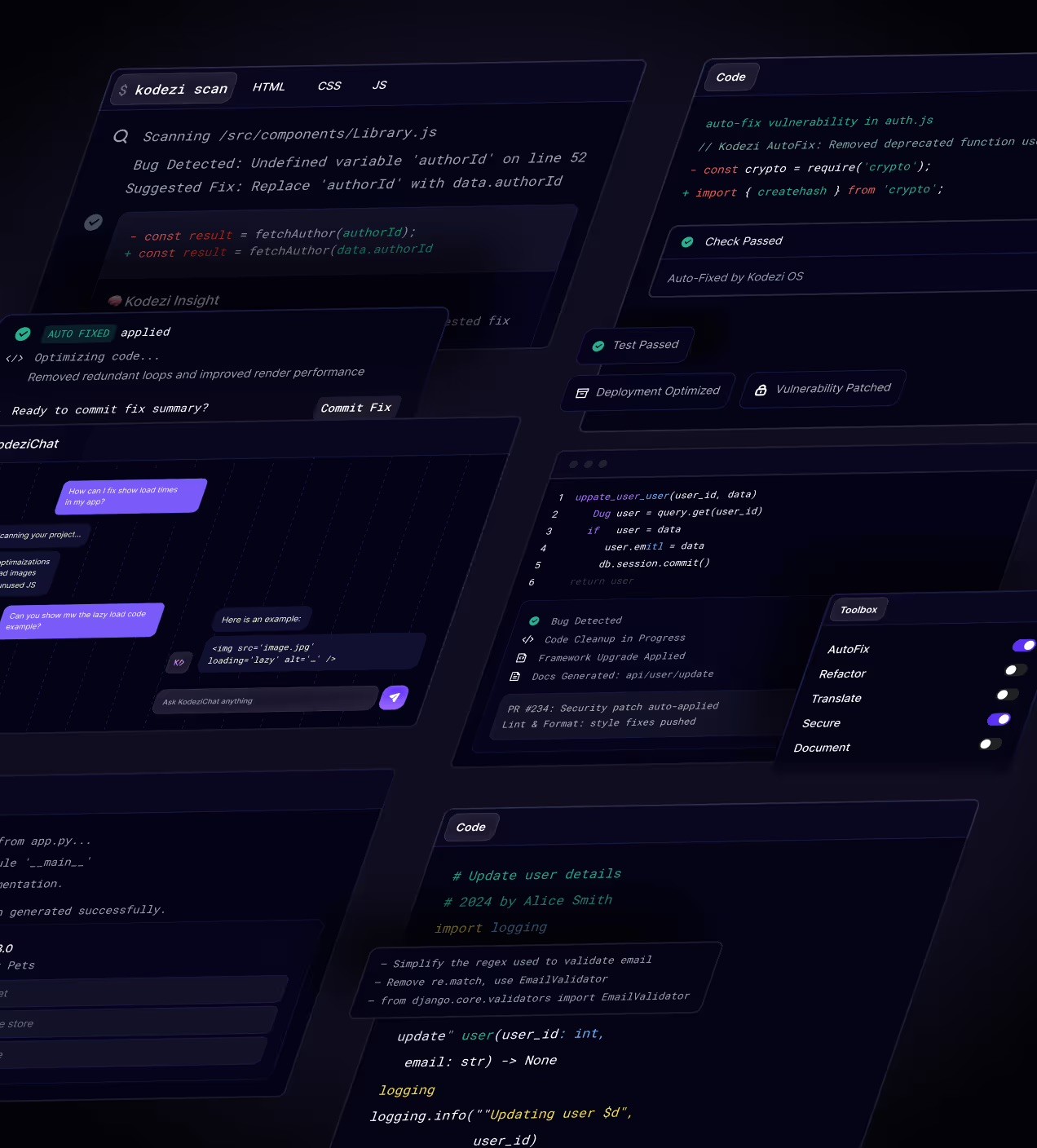
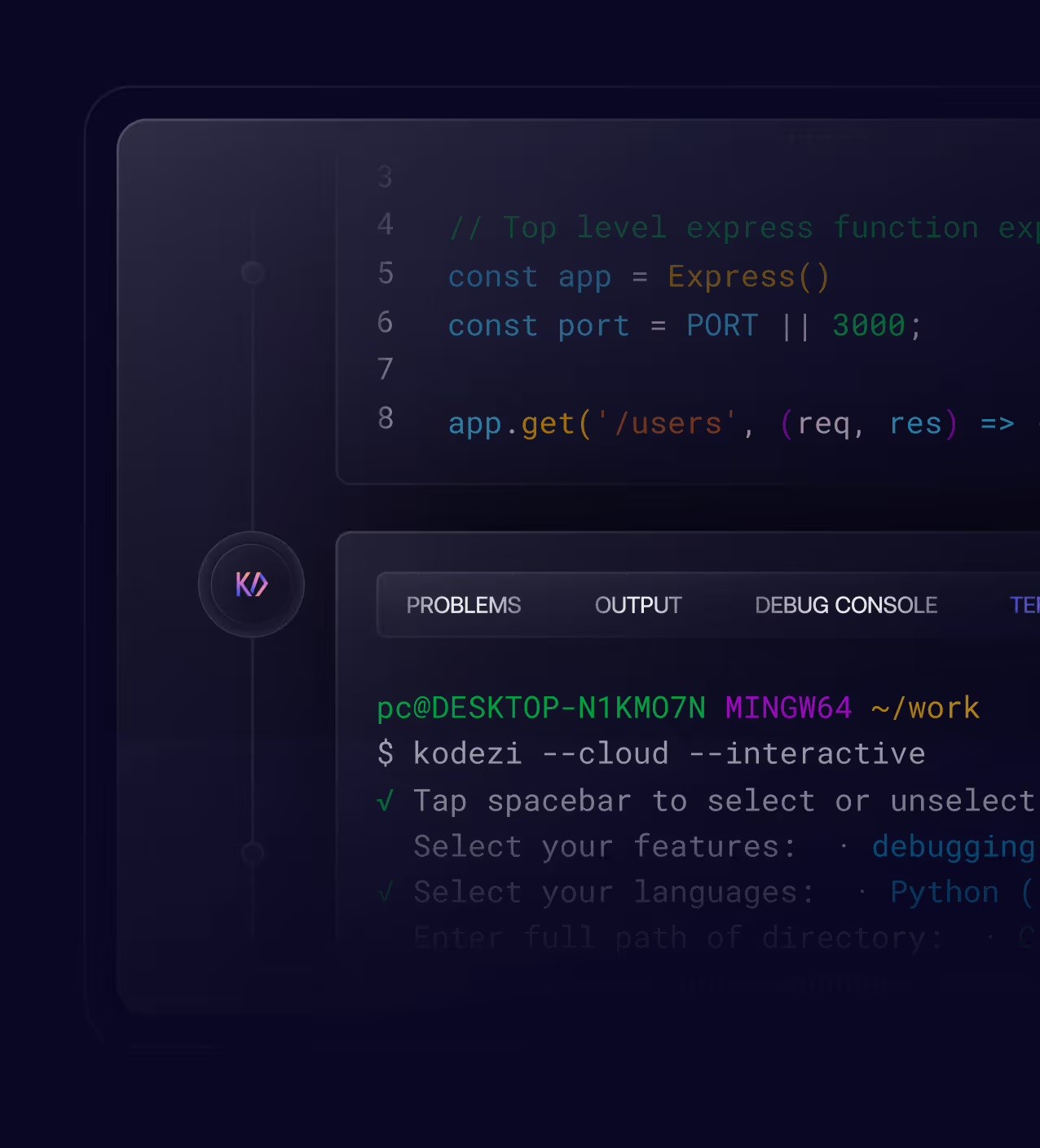
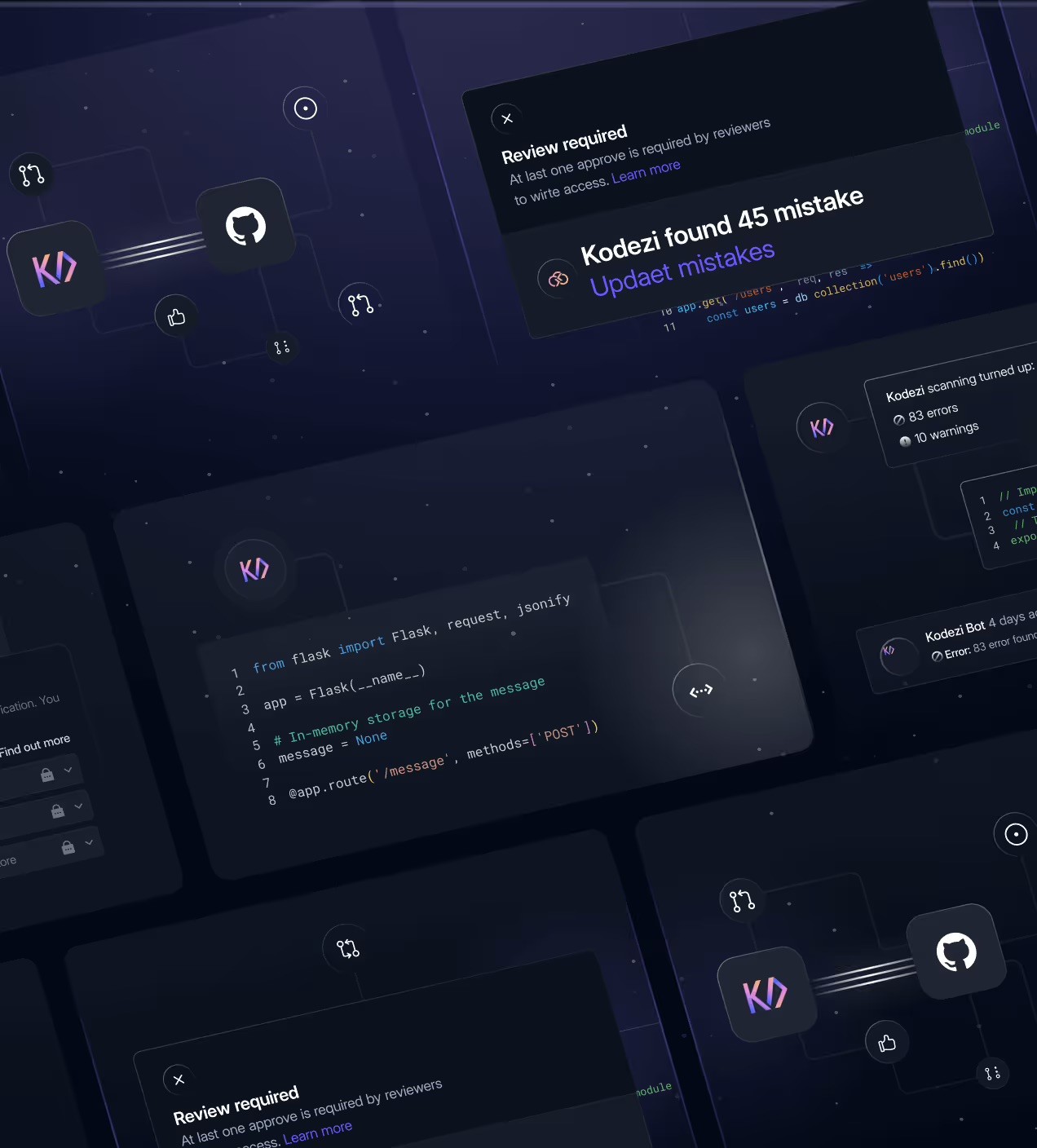
Kodezi wanted a brand identity that is fast, elegant, and developer-oriented. Our design had a deep background with a lot of gradients that highlighted energy and forward-thinking innovation. The purple-to-pink palette gave it a modern edge, while custom geometric patterns brought a sense of structure and logic.
Our typography and iconography designs are crafted with the needs and styles of solo developers and B2B businesses in mind. The Swiss-army-knife graphic became a visual anchor, showing how versatile the tool is.


UX Design
UX designed for faster coding
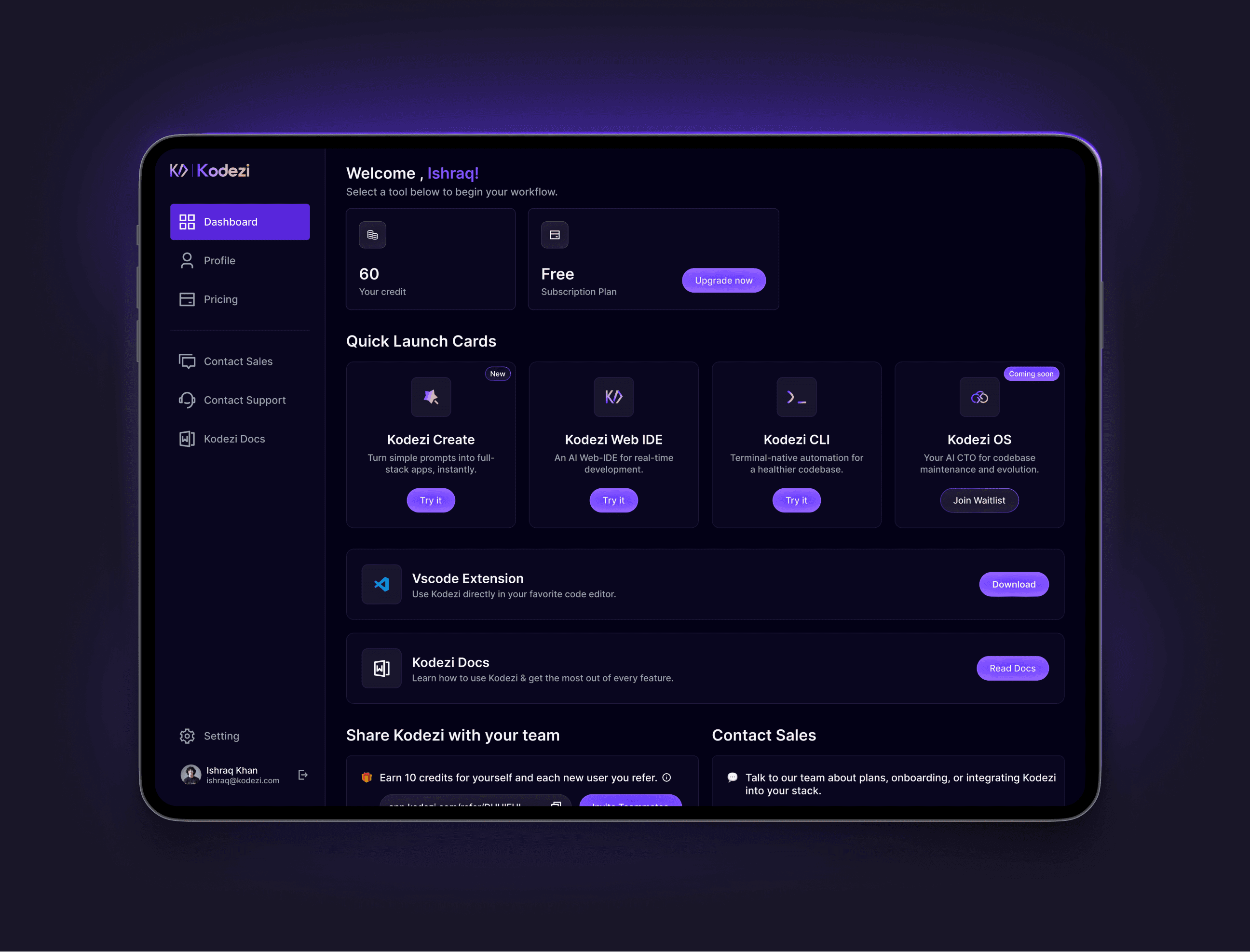
We aimed to keep things simple from the start with Kodezi’s UX. We designed flows that guided users from the first click to full adoption without second-guessing. We built experiences that made onboarding fast, focused on what mattered, and freed you from any hassle. On mobile, we put together clear steps so users feel welcome, see what Kodezi can do, and quickly start to trust our product.
On the desktop, we gave the homepage a clear narrative: “Here’s what we do. Here’s why it matters.” Every touchpoint reinforced confidence. By simplifying the experience, we let users explore Kodezi’s full potential without feeling overwhelmed.


Design System
A scalable system for an AI developer platform
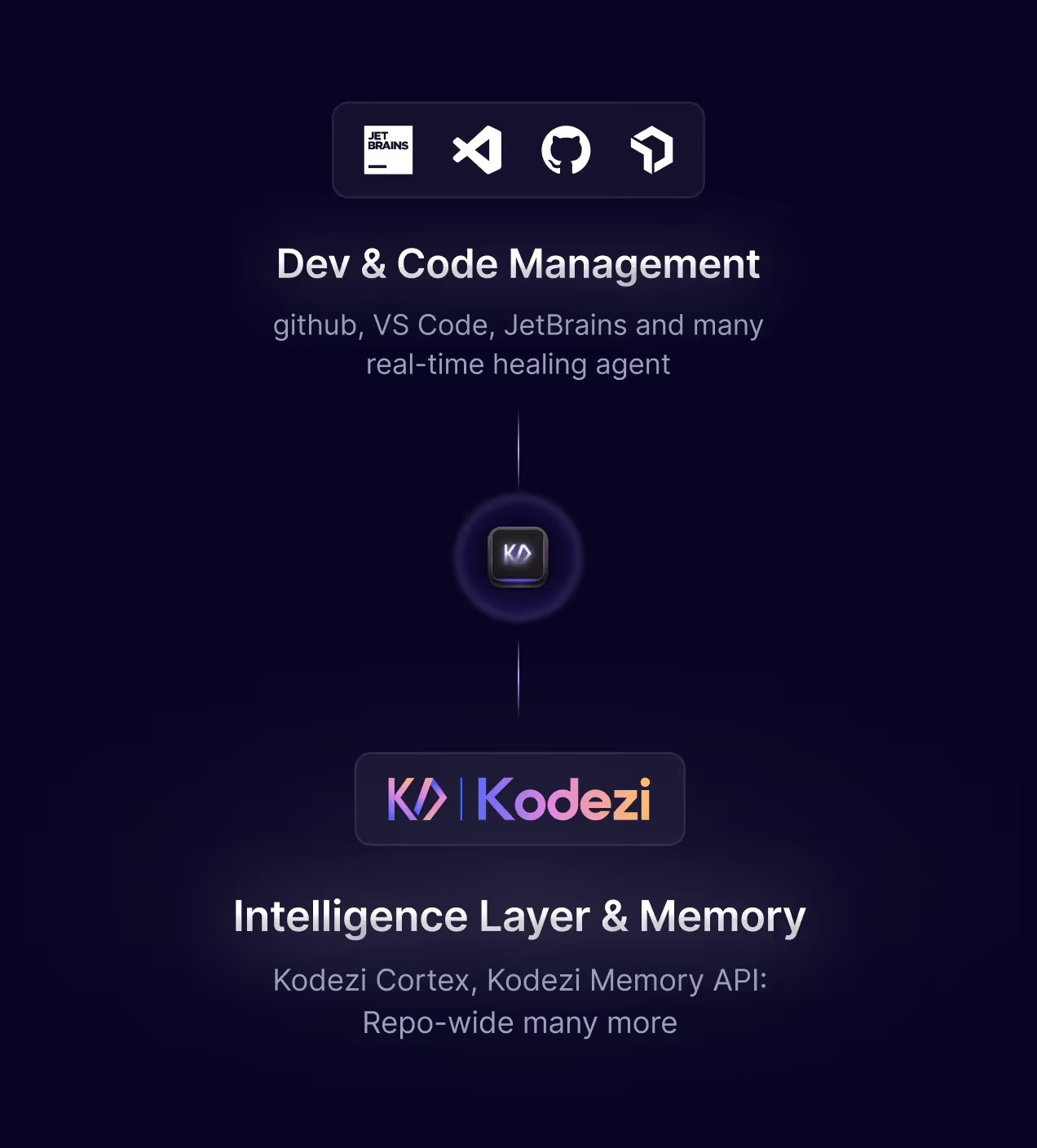
Kodezi’s design system was built for clarity, speed, and scale. We crafted a strong visual foundation using modular components that adapt across platforms, desktop, mobile, and web IDE.
To draw attention to the main works, we placed bright gradients (K21–K25) against deep blacks and added intentional contrast.
We chose Inter Display because its clean style works well and makes the content easy to read on any screen. Each token, color, text style, and spacing was documented for easy developer handoff.
This system doesn’t just look good; it helps Kodezi move fast without breaking consistency as their product evolves.



Results & Outcomes
Real outcomes, not just redesign
01
New users reached their first success moment sooner, with less confusion and fewer steps.
02
Developers interacted more consistently with AI-assisted workflows and core tools.
03
Clear navigation and guided flows improved retention during the first sessions.
04
Users completed key actions faster and trusted AI suggestions more during critical coding moments.


